Why the Old Covenant Had to Die
Editor's Note: This article is an adapted excerpt from the book All the Promises of God are Fulfilled in Christ by Chris Brown.
Chris Brown - February 5, 2026
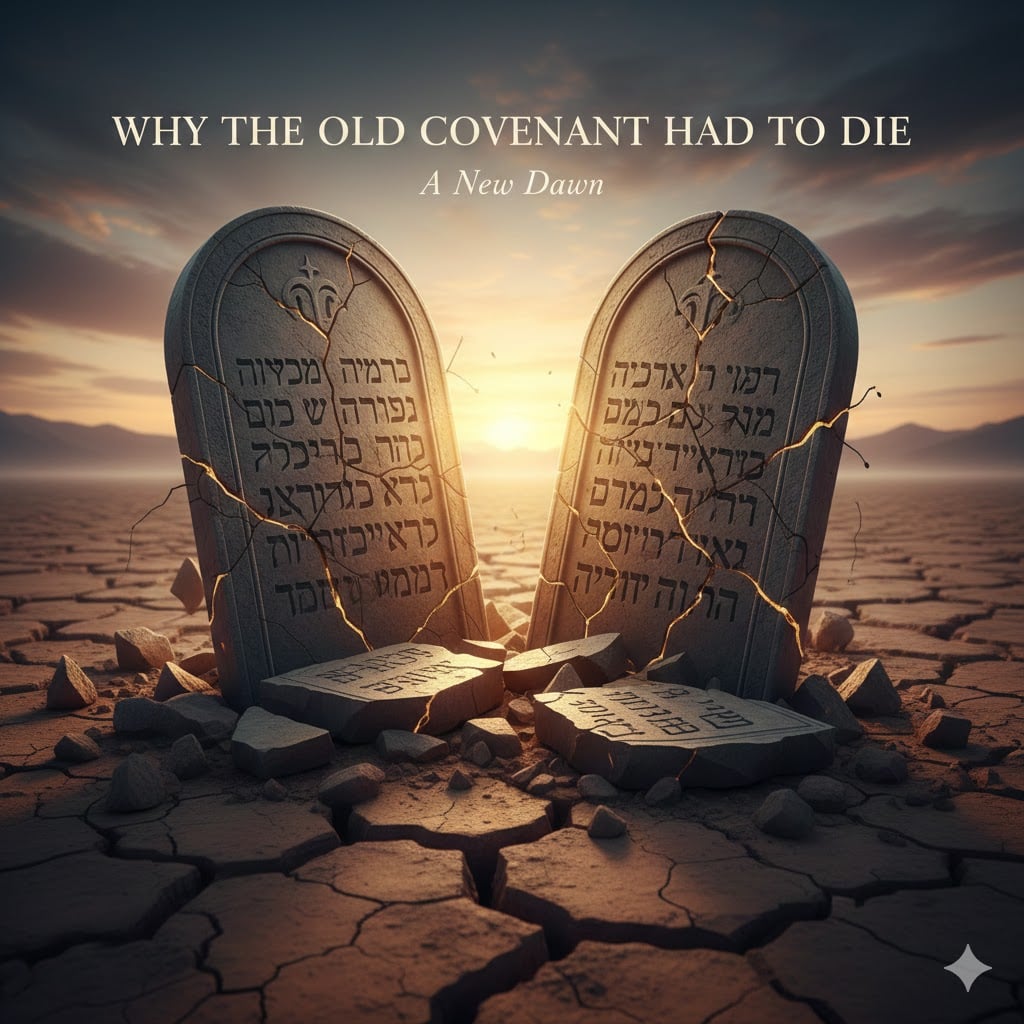


The Suzerain-Vassal Treaty Form Behind the Mosaic Covenant
If you have ever wondered why the Bible treats the covenant at Sinai so differently from the New Covenant, the answer is hidden in plain sight: Deuteronomy is written in the exact literary form of a 2nd-millennium B.C. suzerain-vassal treaty—the international agreement a great king made with a subordinate nation. These treaties were never “gracious” in principle; they were loyalty-or-death contracts. Disobedience did not merely strain the relationship; it legally terminated it and invoked the curses.
The parallel is so precise that scholars (Meredith Kline, Kenneth Kitchen, George Mendenhall, Peter Gentry, and others) can line up the six standard parts of a Hittite/Assyrian vassal treaty next to Deuteronomy with almost perfect correspondence.
This is not a loose analogy. The structure is identical—right down to the order of the sections.
|
Suzerain-Vassal Treaty Element |
Typical Ancient Wording |
Exact Parallel in Deuteronomy |
|
|---|---|---|---|
|
1. Preamble / Identification of the Great King |
“Thus says [Name], the great king…” |
|
|
|
2. Historical Prologue (Why the vassal owes loyalty) |
“I rescued you from…, I gave you this land…” |
Deut 1:6–4:49 – The entire wilderness history and conquest |
|
|
3. Stipulations (What the vassal must do) |
The detailed laws and obligations |
Deut 5–26 – The full Torah legislation |
|
|
4. Document Clause (Deposit and public reading) |
“This treaty shall be placed in the temple and read publicly every year” |
Deut 31:9–13, 24–29 – Tablets placed beside the ark; read every seven years at Feast of Booths |
|
|
5. Witnesses (gods of both parties are invoked) |
“May the gods of heaven and earth witness…” |
Deut 30:19; 31:19; 32:1 – “I call heaven and earth to witness against you this day…” |
|
|
6. Blessings and Curses |
Detailed list of what happens for obedience vs. disobedience |
Deut 27–28 – The longest, most graphic blessings-and-curses section in any known ancient treaty |
Why This Matters for New Covenant Theology
The Mosaic Covenant was never designed to be permanent.
Vassal treaties were always breakable. If the vassal rebelled, the great king enforced the curses and the treaty was finished. That is exactly what happened to Israel (exile = covenant death).
The New Covenant is deliberately “not like” a vassal treaty.
Jeremiah 31:31–34 and Hebrews 8:8–13 quote the treaty’s own language (“I took them by the hand… they broke my covenant”) and then announce that God is making a covenant not according to that pattern—no external tablets, no conditional blessings/curses, no national theocracy. Instead: internal law, total forgiveness, and a relationship that cannot be broken.
Christ is the true Israel who kept the vassal treaty perfectly, took the curses we deserved, and then inaugurated a new and better covenant on entirely different terms (Hebrews 7–10).
In short, once you see Deuteronomy as an ancient vassal treaty, you understand why the New Testament insists the Old Covenant is obsolete (Heb 8:13), cancelled (Col 2:14), and replaced (2 Cor 3). It was always meant to end the day the true Vassal-King arrived.
-----------
Deepen Your Study
All the Promises of God are Fulfilled in Christ
by Chris Brown
If you found this analysis of the Suzerain-Vassal treaty helpful, you'll find the complete theological framework in All the Promises of God are Fulfilled in Christ. Available now in paperback, Audible, and Kindle.
For further reading
Meredith G. Kline, Treaty of the Great King (1963)
Kenneth A. Kitchen, On the Reliability of the Old Testament (2003), pp. 283–294
Peter J. Gentry & Stephen J. Wellum, Kingdom through Covenant (2nd ed.), Ch. 11