When Heaven Met History: How Every Promise Found Its Yes
Editor's Note: This article is an adapted excerpt from the book All the Promises of God are Fulfilled in Christ by Chris Brown.
May 5, 2026 - Chris Brown




There's something profound about standing at the intersection of expectation and fulfillment. Imagine the disciples on that dusty road to Emmaus, hearts heavy with confusion, when suddenly their entire understanding of Scripture was transformed. In one afternoon conversation, thousands of years of prophecy, promise, and preparation crystallized into perfect clarity.
This is the breathtaking reality at the heart of Christian faith: every thread woven through the tapestry of ancient Scripture finds its completion in Christ.
The Audacious Claim
"Do not think that I have come to abolish the Law or the Prophets; I have not come to abolish them but to fulfill them." These words from Matthew 5:17 aren't merely about keeping religious rules or honoring tradition. They represent something far more radical—a declaration that every law, every sacrifice, every prophecy, and every promise in Scripture finds its ultimate meaning and completion in one person.
This isn't a casual connection or symbolic interpretation. It's the fundamental key to understanding the entire biblical narrative.
Consider the comprehensive nature of this claim. When Jesus spoke these words, He was declaring Himself the answer to questions that had echoed through centuries: Who would crush the serpent's head? Through whom would all nations be blessed? Who was the prophet like Moses? Where was the suffering servant who would bear our griefs?
The answer to every question was standing before them.
The Divine Hermeneutic
Perhaps nowhere is this more beautifully illustrated than in Luke 24, where Jesus provides His own interpretive method for understanding Scripture. "Beginning with Moses and all the Prophets, he interpreted to them in all the Scriptures the things concerning himself."
Picture this scene: the resurrected Christ, walking alongside bewildered disciples, opening the Law, the Prophets, and the Psalms—the entire Hebrew Bible—and showing how every part pointed to Him. This wasn't selective proof-texting or creative reinterpretation. It was revealing what had always been there.
Later, Jesus made this even more explicit: "Everything written about me in the Law of Moses and the Prophets and the Psalms must be fulfilled." The entire Old Testament—in all its diversity of genre, author, and historical context—converges on one central figure.
This transforms how we read Scripture. Every passage isn't just historical record or moral instruction; it's part of a unified testimony pointing toward redemption accomplished in Christ.
The Apostolic Chorus
The early church didn't invent this interpretive approach—they received it directly from Jesus and proclaimed it boldly. Peter declared, "What God foretold by the mouth of all the prophets, that his Christ would suffer, he thus fulfilled." Notice the phrase: "all the prophets." This wasn't isolated prediction but consistent, unified testimony.
When Apollos powerfully refuted opponents "by the Scriptures," showing that the Christ was Jesus, he was demonstrating what should have been evident to anyone who knew those texts well. The prophetic testimony was clear enough that someone with solid biblical knowledge could persuasively prove Christ's identity to those most familiar with those very prophecies.
Paul's methodology mirrored this approach. Acts 28:23 records how he spent an entire day "expounding to them, testifying to the kingdom of God and trying to convince them about Jesus both from the Law of Moses and from the Prophets." From morning till evening—the thoroughness required to trace the extensive prophetic witness throughout Scripture.
The Grammatical Precision
Sometimes fulfillment hinges on careful attention to detail. In Galatians 3:16, Paul makes a grammatical argument that reveals the precision of divine promise: "Now the promises were made to Abraham and to his offspring. It does not say, 'And to offsprings,' referring to many, but referring to one, 'And to your offspring,' who is Christ."
The singular versus plural matters. The promise to Abraham about blessing all nations wasn't through many descendants generically, but through one specific descendant—Christ. This demonstrates how meticulously the ancient promises pointed forward to their ultimate fulfillment.
The Superior Revelation
Hebrews 1:1-2 captures the progression and culmination beautifully: "Long ago, at many times and in many ways, God spoke to our fathers by the prophets, but in these last days he has spoken to us by his Son."
All the fragmentary revelations—the theophanies, the prophetic visions, the priestly ceremonies, the royal promises—were like individual notes in a symphony. Christ is the full orchestration, bringing every theme together in perfect harmony.
Colossians 2:2-3 goes even further, describing Christ as one "in whom are hidden all the treasures of wisdom and knowledge." He isn't merely another piece of the revelatory puzzle; He's the mystery that unlocks all divine truth. Every fragment of revelation finds its ultimate meaning and coherence in Him.
The Ancient Longing
One of the most poignant aspects of this fulfillment is realizing what the Old Testament saints themselves understood. Jesus declared, "Many prophets and kings desired to see what you see, and did not see it, and to hear what you hear, and did not hear it."
Even Abraham, Jesus revealed, "rejoiced that he would see my day. He saw it and was glad." From the very beginning of God's covenant promises, Christ was the ultimate object of hope.
Peter explains that the prophets themselves "searched and inquired carefully" about the salvation they were predicting, understanding they were serving future generations. They knew they were writing about something—someone—greater than their own experience. Even angels, Peter notes, "long to look" into these things.
The greatest figures in Israel's history looked forward with eager anticipation to what believers now experience in Christ.
The Universal Extension
Here's where the story takes its most surprising turn: these promises made to Israel now extend to all nations through Christ. Romans 15:8-12 shows how Christ "became a servant to the circumcised to show God's truthfulness, in order to confirm the promises given to the patriarchs, and in order that the Gentiles might glorify God for his mercy."
The inclusion of all nations wasn't an afterthought or plan B. It was always the intention—woven into the Abrahamic promise that through his offspring "all the families of the earth" would be blessed.
The Spirit of All Prophecy
Revelation 19:10 provides a summary principle: "The testimony of Jesus is the spirit of prophecy." The essence of all biblical prophecy is to testify about Jesus. Every prophetic word ultimately points to Christ and His redemptive work.
This isn't reading something into Scripture that wasn't there. It's recognizing what was always the heart of divine revelation.
Standing at the Intersection
We stand today where expectation meets fulfillment, where promise becomes reality, where shadows give way to substance. Every thread of biblical revelation—from Genesis to Malachi—finds its completion in Christ.
The question isn't whether Scripture testifies to Christ, but whether we have eyes to see what has been revealed. The testimony has always been there, written in the scroll of the book, proclaimed by prophets and kings, anticipated by angels, and now made manifest.
In Christ, every promise of God finds its "Yes." The long-expected answer to humanity's deepest need has arrived, and His name is Jesus.
_______________
Deepen your study.
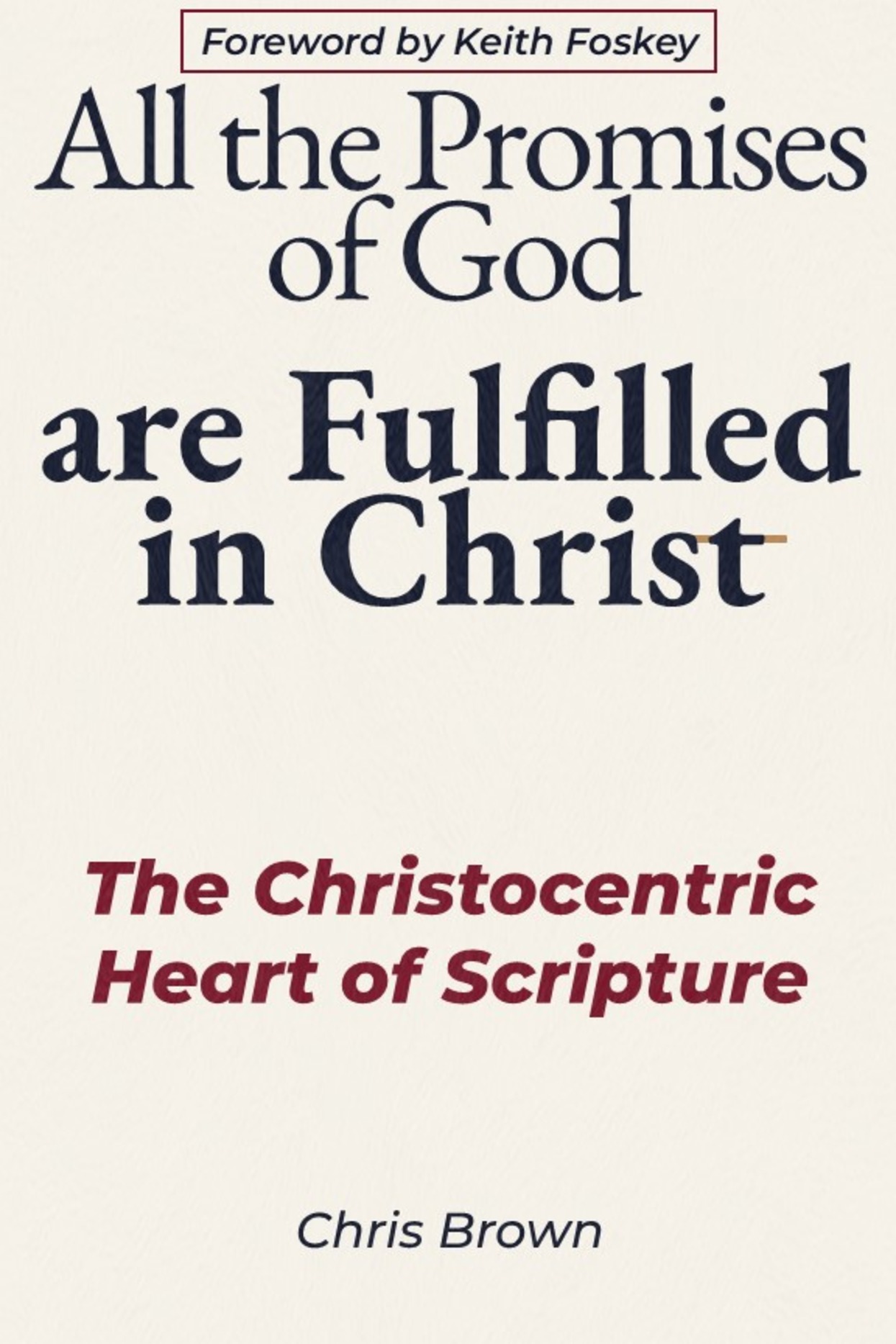
All the Promises of God are Fulfilled in Christ
by Chris Brown
If you found this article helpful you'll find the complete theological framework in All the Promises of God are Fulfilled in Christ.
Available now in paperback, Audible, and Kindle.