What Is New Covenant Theology?
July 8, 2026 - Chris Brown



When someone asks, what is new covenant theology, they are usually not asking for a slogan. They are trying to make sense of their Bible. They want to know how the Old Testament relates to the New, how the law of Moses relates to the Christian, and how all of God’s promises come to their fulfillment in Jesus Christ.
New Covenant Theology, often called NCT, is a Christ-centered framework for reading Scripture that understands the new covenant as the decisive interpretive reality of redemptive history. It affirms the unity of God’s saving purpose from Genesis to Revelation, while also insisting that the coming of Christ brings real covenantal change. In other words, the Bible tells one unfolding story of redemption, but that story reaches its appointed goal in the person and work of the Son.
That matters because many of the most difficult questions in theology are really covenant questions. How should Christians understand Israel and the church? Is the Mosaic law still binding as law? What continues from the old covenant, and what has passed away? NCT answers these questions by starting where the apostles start - with the supremacy of Christ and the fulfillment of the Scriptures in Him.
What is new covenant theology in simple terms?
In simple terms, New Covenant Theology teaches that God’s redemptive plan has always centered on Christ, and that the new covenant established by His blood is the covenant under which believers now live. The old covenant, given through Moses, was real, holy, and purposeful, but it was temporary and preparatory. It pointed forward to Christ and has now reached its fulfillment.
NCT therefore rejects the idea that Christians are under the old covenant law as a covenantal system. Believers are not under Moses. They are under Christ. That does not mean God’s moral character changes, or that holiness is weakened. It means the believer’s rule of life is understood through the teaching and authority of Jesus and His apostles, often described as the law of Christ.
This is one of the clearest distinctions between NCT and classic covenant theology on the one hand, and dispensationalism on the other. NCT agrees that the Bible unfolds in covenants and promises, but it does not flatten those covenants into one undifferentiated administration. At the same time, it does not separate Israel and the church into two peoples with two parallel programs. It reads the whole Bible through fulfillment in Christ.
The Heartbeat of New Covenant Theology
At its center, NCT is not merely a system for sorting categories. It is a theological commitment to read Scripture the way the New Testament reads Scripture. Jesus says the Scriptures testify about Him. Paul says all the promises of God find their Yes in Christ. Hebrews teaches that the old covenant has become obsolete because a better covenant has come.
That means NCT is deeply concerned with redemptive history. Promises are not discarded. They are fulfilled. Types are not denied. They reach their substance in Christ. Shadows are not treated as mistakes. They were always meant to give way to the reality.
This is why fulfillment theology matters so much. The question is not whether God keeps His promises. He does. The question is how He keeps them. The New Testament repeatedly answers that God fulfills His covenant promises in and through Christ, and that those united to Christ inherit what the promises anticipated.
How NCT Understands the Biblical Covenants
New Covenant Theology pays close attention to the major covenants in Scripture, especially the Abrahamic covenant, the Mosaic covenant, the Davidic covenant, and the new covenant promised in prophets like Jeremiah and Ezekiel.
The Abrahamic covenant is foundational because it contains God’s promise to bless the nations through Abraham’s offspring. The New Testament identifies that offspring ultimately as Christ. The Davidic covenant narrows that promise further by pointing to the coming King whose throne will be established forever. The Mosaic covenant, however, occupies a distinct role. It governs Israel, a largely unregenerate people, as a nation under law and serves a temporary purpose within redemptive history.
NCT does not treat the Mosaic covenant as the eternal blueprint for the Christian life. It recognizes the covenant's divine purpose of magnifying sin and delivering the promised seed, while also honoring the New Testament’s insistence that it was provisional. Galatians speaks of the law as a guardian until Christ came. Hebrews says the priesthood, sacrifices, and covenantal structures have been surpassed by a better reality. Romans teaches that believers have died to the law through the body of Christ.
The new covenant is therefore not a minor update to Moses. It is the climactic covenant secured by Christ’s blood. Under this covenant, sins are truly forgiven, God’s law is written on the heart, and the Spirit is given to God’s people. This is not merely national arrangement. It is eschatological fulfillment
What about the law?
This is often where the real debate begins. If Christians are not under the law of Moses, does that mean God’s commands no longer matter? By no means. NCT strongly affirms obedience, holiness, and the unchanging righteousness of God.
The issue is not whether God still commands His people. The issue is which covenantal law code governs the people of God. NCT argues that the Mosaic law belongs to the old covenant and cannot be divided in a way that leaves one part binding as covenant law while the rest expires. Scripture speaks of the law covenant as a unit.
That said, many commands found under Moses are repeated and deepened in the new covenant. Why? Because they reflect God’s character and are now taken up under the authority of Christ. The believer obeys not as one standing at Sinai, but as one united to the risen Lord. The law of Christ is not less holy than Moses. It is clearer, fuller, and bound up with the presence of the Spirit.
This is one place where care is needed. NCT does not promote lawlessness, and it should never be used to excuse casual Christianity. If anything, the new covenant raises the standard by bringing God’s people into a more direct and Spirit-enabled conformity to Christ.
How NCT Differs from Covenant Theology and Dispensationalism
New Covenant Theology is often understood best by comparison, though it should stand on its own biblical claims.
Classic covenant theology tends to emphasize continuity between Israel and the church and often treats the Mosaic law, especially the moral law summarized in the Ten Commandments, as continuing in a direct covenantal sense for believers. NCT appreciates the concern for unity in God’s saving purpose, but it sees greater discontinuity at the coming of Christ, especially regarding the old covenant law.
Dispensationalism, by contrast, tends to emphasize discontinuity and often maintains a sharper distinction between Israel and the church. NCT agrees that covenantal transitions matter, but it does not see the church as a parenthesis or a separate people alongside Israel. Rather, it sees Christ as the true seed, true servant, and true Israel, and those in Him as heirs according to promise.
So NCT occupies a different space. It is neither a simple middle ground nor a compromise position. It is a distinct attempt to let the new covenant set the terms for how the whole Bible is read.
Why this Matters for the Church
This is not a debate for seminary shelves only. It affects preaching, discipleship, assurance, and corporate worship.
A preacher who understands New Covenant Theology will preach the Old Testament as Christian Scripture without forcing every passage into moralism or nationalistic expectation. He will show how the law, prophets, wisdom literature, priesthood, sacrifices, kingship, and temple all find their fulfillment in Jesus.
A church shaped by NCT will also think more carefully about ethics. Christians are called to holiness, but not by being sent back to the old covenant as their covenantal authority. They are called to walk by the Spirit, obey the commands of Christ, and live as those who belong to the age to come.
This framework also guards the gospel. When believers confuse covenants, they often blur law and grace. NCT helps preserve the glory of Christ’s finished work by making clear that righteousness is not mediated through the Mosaic covenant but through union with Christ, who has suffered and died for His people.
For readers seeking clarity on fulfillment, law, promise, and the church, this is why ministries like Build Your Faith Books keep returning to these themes. They are not academic distractions. They shape how the church hears the voice of her Shepherd in all of Scripture.
A Final Pastoral Word on What isNew Covenant Theology
If you are still asking what is new covenant theology, the best next step is not merely to memorize definitions. Read your Bible with close attention to how the New Testament interprets the Old. Watch how Jesus fulfills the patterns, promises, and institutions that came before Him. Pay careful attention to passages like Jeremiah 31, Luke 22, Romans 7, Galatians 3, 2 Corinthians 3, and Hebrews 8 through 10.
You do not need a novelty. You need a faithful way of reading Scripture that honors every part of God’s Word while giving Christ the central place the Father has given Him. That is where New Covenant Theology is at its strongest. It insists that the Bible is one story, one gospel, one saving purpose, and one all-sufficient Savior.
_______________
Deepen your study.
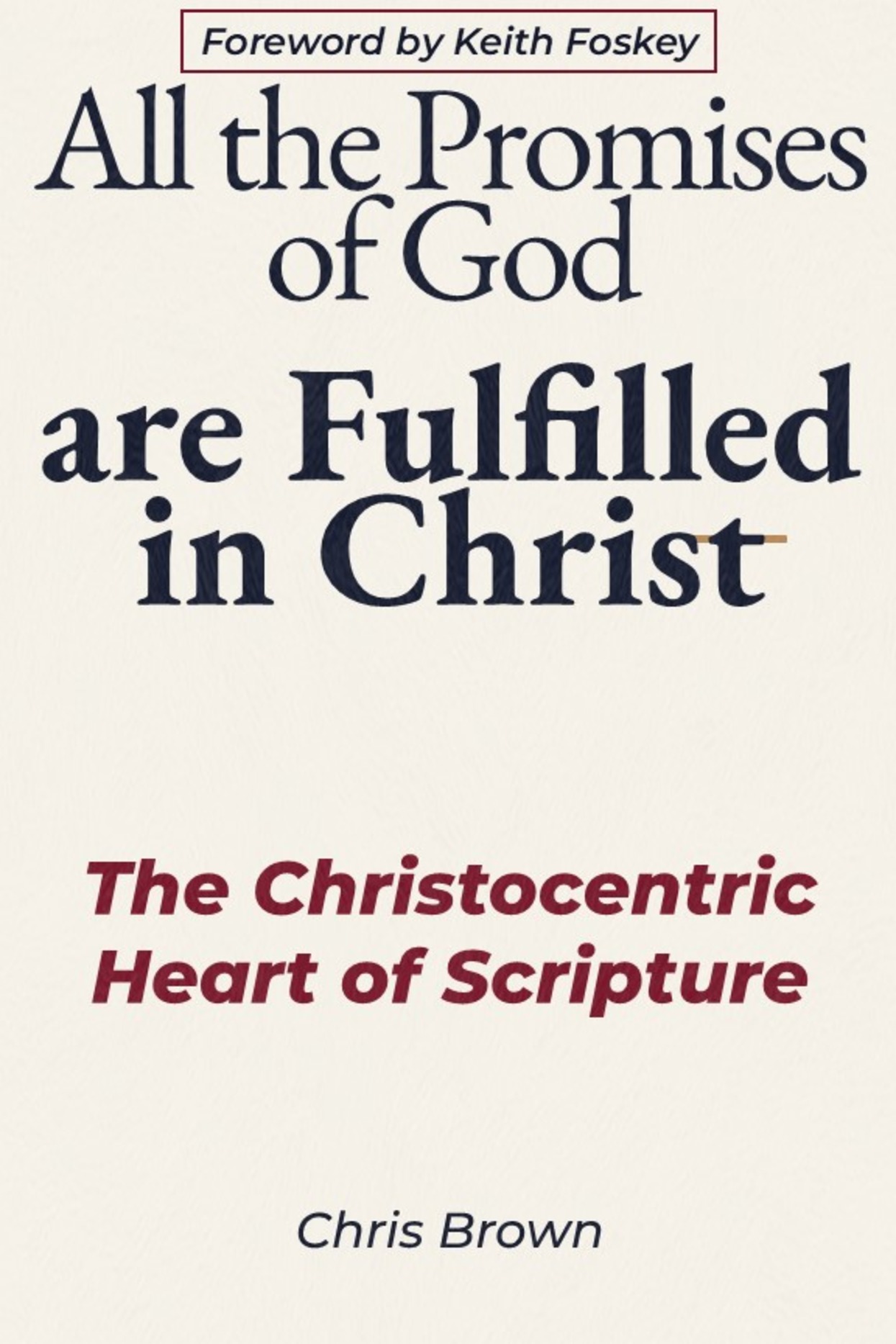
All the Promises of God are
Fulfilled in Christ
by Chris Brown
If you found this article helpful you'll find the complete theological framework in All the Promises are Fulfilled in Christ.
Available now on Amazon.